

You do not need a haircut, a new color, or another styling tool. The difference is literally a few inches to the side.
This post contains affiliate links. If you purchase through them, I may earn a commission at no additional cost to you.
Before you book a haircut because your hair feels flat, move your part. If the new direction needs support, start with a lightweight root-lift spray rather than coating the roots with something heavy.
Not all the way to your ear. Not into the rigid, sprayed-down side bang many of us remember. Start one finger-width away from the center, move your hair to the heavier side, and look again.
That small line is the deep-side-part trend coming back for Fall 2026, but the modern version is softer than the name makes it sound. It creates asymmetry, movement, and a little root lift without changing the length, color, or actual haircut.
My rule for this one is: change the line before you change the length.
It may not replace the haircut you genuinely need. But it is the free test I would try first.
Why the side part suddenly looks current again
For years, the middle part represented the clean, minimal, perfectly balanced hairstyle. Then it became so standard that switching the line started to feel like a real styling decision again.
On the Fall/Winter 2026 runways, the side part appeared in more than one mood. Vogue documented low, textured side parts at Andreas Kronthaler for Vivienne Westwood, a deep part with soft wisps at Dior, and part switches at Saint Laurent, Hermes, and Acne Studios. Who What Wear called it one of the easiest beauty trends to adopt from the season.
The interesting part is not that one old hairstyle returned. It is that the same line can make hair look polished, romantic, boyish, glamorous, or intentionally undone depending on what happens around it. When the roots need a little grip, a dry volume spray keeps the effect airy rather than lacquered.
The part is punctuation. The rest of the hair decides the tone.
The version that looks current is not as deep as you think
If “deep side part” immediately gives you a picture of a hard diagonal line and one heavy sheet of hair across the forehead, soften the picture.
Current versions range from barely off-center to dramatically swept. What connects them is movement. The hair does not look forced into submission. Even the sleek runway versions usually have something that interrupts the perfection: soft texture, an ear tuck, a low ponytail, a loose end, or a few wisps near the face.
I would begin with less drama than you think you need. Move the part one finger-width from the center. If the difference is too subtle, move it another finger-width. Stop when the heavier side gains shape without the lighter side looking strained.
You can always go deeper. Starting at maximum depth makes it harder to see which small change actually helped.
How do you find the right place for a side part?
There is no single correct line, but these three starting points make the experiment much easier.
Start slightly off-center for the softest change
This is the version I would suggest to someone who has worn a middle part for years and does not want to feel as if she woke up in a different decade.
Move the first inch of the part to one side while keeping the back closer to its usual position. That slight diagonal creates asymmetry around the face without moving the entire weight of the hair.
It works especially well with loose hair, a soft blowout, or natural texture because the line almost disappears once the hair settles.
Use the eyebrow arch for a cleaner, deeper line
For a more deliberate side part, use the highest point of the eyebrow arch as a visual guide. Hairstylists quoted by British Vogue recommend this placement particularly for a sleek finish.
I would use the eyebrow as a starting point, not a commandment. Your natural growth pattern may ask the line to shift slightly in either direction.
Let the cowlick vote
A cowlick is not a styling failure. It is information.
Parting against the natural direction can create useful lift, but it may also require more heat and product to stay there. Parting with it can feel easier and softer. Try both sides on damp roots with a gentle detangling brush and notice which one gives you volume without a daily argument.
The best side part is not necessarily the one a face-shape chart assigns you. It is the one that works with your texture, growth pattern, haircut, and patience.
Try this five-minute side-part test
You do not need to commit to a full wash and blowout to see whether the idea has potential.
- Lightly dampen the front and crown rather than wetting all your hair.
- Make a part one finger-width off-center using the end of a comb or your fingertip.
- Direct the heavier side up and away from the scalp, not flat across it. A small round blow-dryer brush can help if that is already part of your routine.
- Tuck the lighter side behind your ear or pin it briefly while the roots dry.
- Take one photo straight on and one from each side before making the part deeper.
The camera is useful because a new part can feel strange simply because it is unfamiliar. You are looking for balance, movement, and whether your eyes go to your face or to a very obvious line in the hair.
If it still feels flat, move the part slightly farther over. If it feels theatrical, bring it closer to the center or loosen the front.
How I would style a side part for different hair textures
The placement matters, but the finish is what keeps the same trend from looking identical on everyone.
For fine or flat hair: build lift before shine
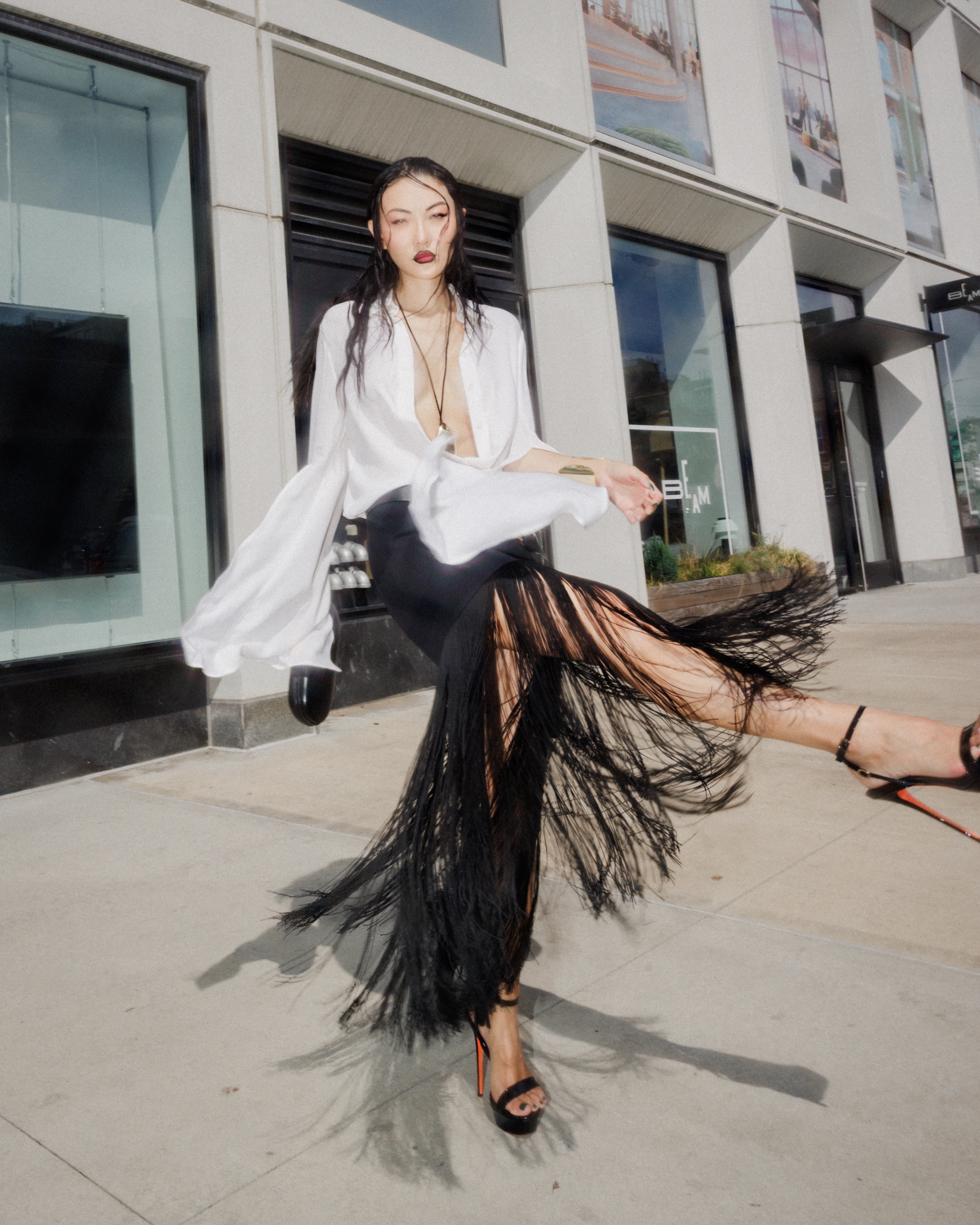
Moving the hair against its usual direction can create immediate root lift on the heavier side. Protect that lift by keeping oils and heavy creams away from the roots.
For more volume, dampen the crown and blow-dry the top section up and back rather than pressing it across the scalp. A small amount of light mousse or texture spray can help, but the direction of the roots is doing most of the visual work.
If the part forms a very bright, exposed line, blur the first inch with your fingertip rather than drawing it harder.
Shop Lift Without Weight
These are the lightweight formulas and tools that support the root direction without turning the part stiff.
For waves and curls: part for shape, not perfect straightness
A side part can move more volume to one side and give curls a stronger overall silhouette. British Vogue’s stylist guidance also points to the shape and volume a side part can create in naturally curly hair.
I would make the part while the roots are damp, then let the texture decide how precise the line needs to be. A small amount of flexible finishing gel or soft styling cream can define the front without making a perfectly straight scalp line look disconnected from soft, irregular curls. A finger part often feels more natural.
If moving the part breaks up curl clumps, re-wet only the affected sections and restyle them rather than combing through everything.
For a bob: use the imbalance
A bob already has a strong outline. The side part gives that clean shape a little tension.
Try one side tucked behind the ear and let the heavier side fall forward. With a blunt bob, that small imbalance can be enough. You do not also need an exaggerated wave, a deep swoop, and a statement clip unless the drama is intentional.
For a softer bob, keep the ends piecey and the part less exact. For an evening version, make the line cleaner and let one side look almost sculpted.
Shop Shape Without Stiffness
These flexible formulas help shape the hair while preserving movement and touchable texture.
For long hair: do not let the heavy side become a curtain
The risk with long hair is that all the weight falls forward and hides the face.
Lift the roots, then direct the lengths back or behind the shoulder. A soft bend near the cheekbone can frame the face without turning into a heavy side bang. If the hair keeps collapsing forward, tuck a small section behind the ear under the top layer.
For day-two hair, choose the reset that matches the actual problem: an advanced dry shampoo for an overall refresh, an oil-control dry shampoo for roots that lose lift quickly, or a frizz-shielding spray when humidity is disturbing the lengths.
The goal is movement around the face, not fabric over it.
Shop the Day-Two Reset
Use this edit when the part needs fresh lift, oil control, or humidity protection between wash days.
For a ponytail or bun: keep one thing undone
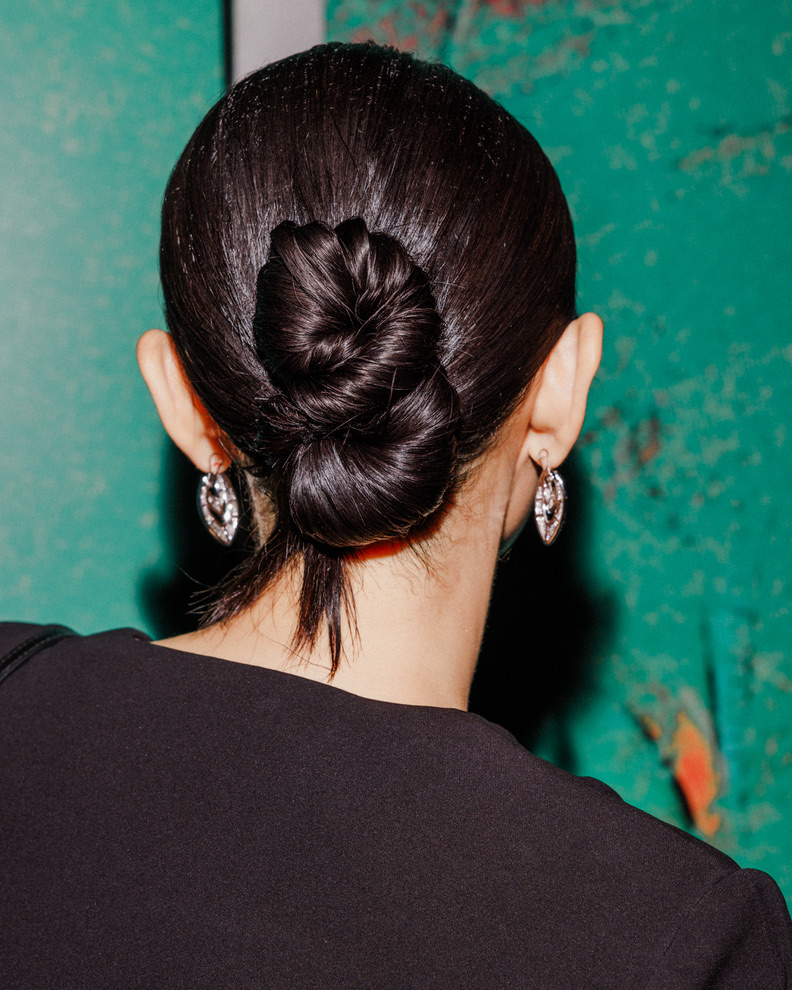
A side part can make the simplest low ponytail feel much more considered. The Fall/Winter 2026 Victoria Beckham runway paired a strong side part with smooth, natural texture and a low ponytail, described by the brand as polished but slightly undone.
That last contrast is what I would keep. If the part is sharp, let the ponytail feel soft. If the bun is sleek, leave a little movement near the hairline. Use a superfine hairspray, a lightweight styling cream, or a flexible finishing spray only where the shape needs support. When every section is equally rigid, the hairstyle can begin to feel dated.
Shop Sleek but Still Soft
This finishing edit adds polish without freezing every section into place.
The three mistakes that send it back in time
The part is doing all the talking
If the first thing you notice is a white line across the scalp, the part may be too hard or too deep for the finish around it.
Soften the front inch, add root movement, or create the line with a fingertip instead of a fine comb. The part should shape the hairstyle, not become the hairstyle.
The heavy side is glued to the forehead
A flat swoop can quickly resemble the most literal early-2000s version. Lift the roots before directing the hair sideways. Even a sleek side part benefits from a little space between the hair and the head.
Think up, then over.
Every detail is too perfect
A severe part, identical curls, heavy shine, a tight ear tuck, and immovable hairspray all compete to make the style look finished.
Choose one point of polish. Keep the clean part but brush out the waves. Keep the sculpted side but make the ponytail soft. Keep the volume but let the line be imperfect.
The modern side part needs a little air in it.
Do side parts only work for certain face shapes?
I would not let a face-shape chart make this decision for you.
Those guides can offer a starting point, but most people are not one perfect geometric category. Hair density, curl pattern, cowlicks, layers, bangs, glasses, and the amount of volume all change the result.
Instead, test three placements: slightly off-center, aligned near the eyebrow arch, and one version guided by your natural part. Photograph each with the hair styled the same way.
Choose the one that gives you the balance you want and still feels manageable on a normal morning. A theoretically flattering part that takes twenty minutes to fight into place is not automatically the best part.
Before you buy another hair product
Try the trend with what you already own: water, a comb or fingertip, a dryer if you normally use one, and a pin or clip while the roots set.
If the shape works but falls quickly, then identify the actual problem. Fine hair may need light root support. Humidity may call for flexible hold. Curls may need the front sections refreshed. A cowlick may need direction while damp rather than another layer of product after it dries.
Buy for the problem you observed, not for the fantasy version of the hairstyle.
The deep side part is a small trend, which is exactly why I like it. It does not ask you to become a different person, commit to a cut, or buy an entirely new routine. It simply changes the balance of what is already there.
Before you change the color, add the layers, or cut the bangs, move the line.
Sometimes two inches is enough to make the whole hairstyle feel new again.
Frequently asked questions about deep side parts
How deep should a modern side part be?
Start about one finger-width away from the center and move farther only if you want more asymmetry. The current look depends more on movement and softness than on creating the deepest possible line.
Which side should I part my hair on?
Test both sides while the roots are damp and let your cowlick help decide. Choose the side that creates useful lift and shape without requiring a daily fight with your natural growth pattern.
Do deep side parts work for every face shape?
A face-shape chart can be a starting point, but hair texture, density, layers, glasses, and natural growth matter too. Photograph three placements with the hair styled the same way and choose the version that gives you the balance you want.
How do I keep a side part from falling flat?
Direct damp roots up before moving them over, then let them cool in place. Fine hair may need lightweight root support, while curls often need the front sections refreshed rather than coated with more product.